


The 5 Excavator Parts That Can Turn a Good Monday Into a Disaster


Monday morning.
Coffee in hand.
The sun is shining.
The machines are starting up.
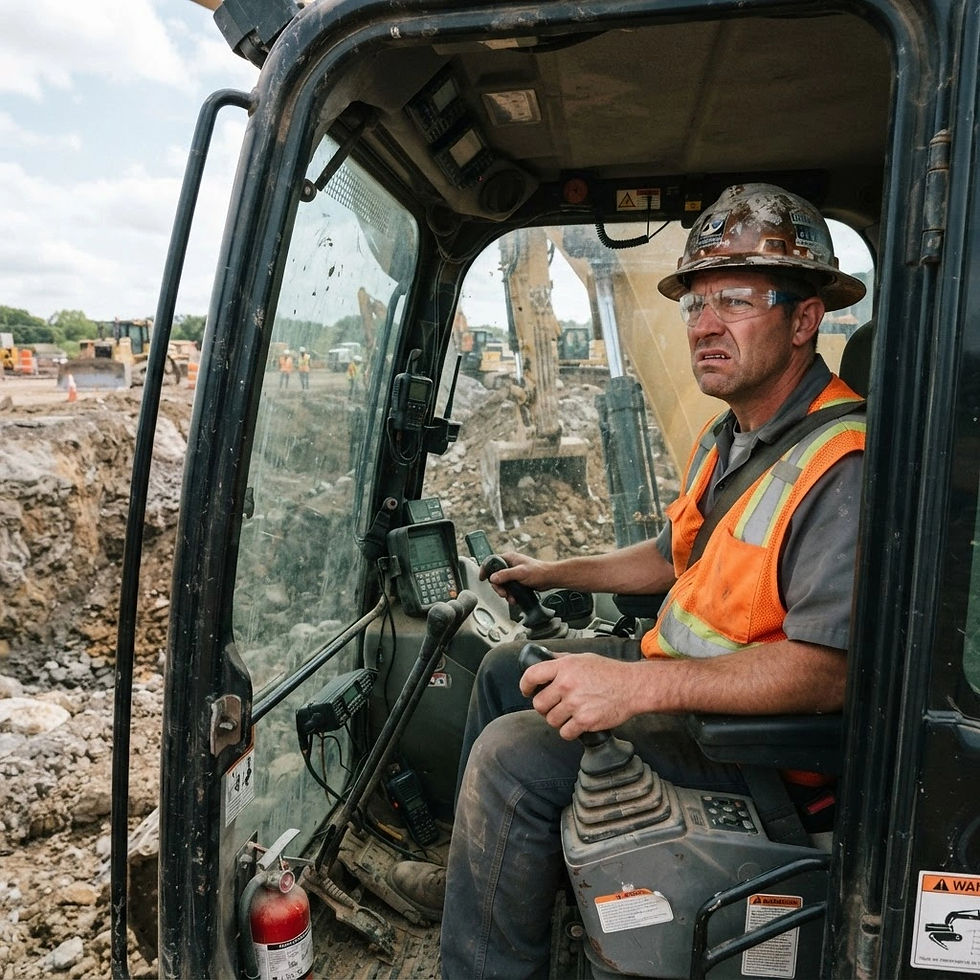
The operators are heading to site.
The client is happy.
Everything is going beautifully.
Then someone phones:
“Boss, the excavator's stopped.”
And just like that...
Monday is fucked.
There are plenty of things that can stop an excavator from earning money.
Some are minor.
Some are inconvenient.
And some have the remarkable ability to turn a perfectly respectable working day into a financial crime scene.
Here are five of the biggest offenders.
1. The Hydraulic Pump
Let's start with the big one.
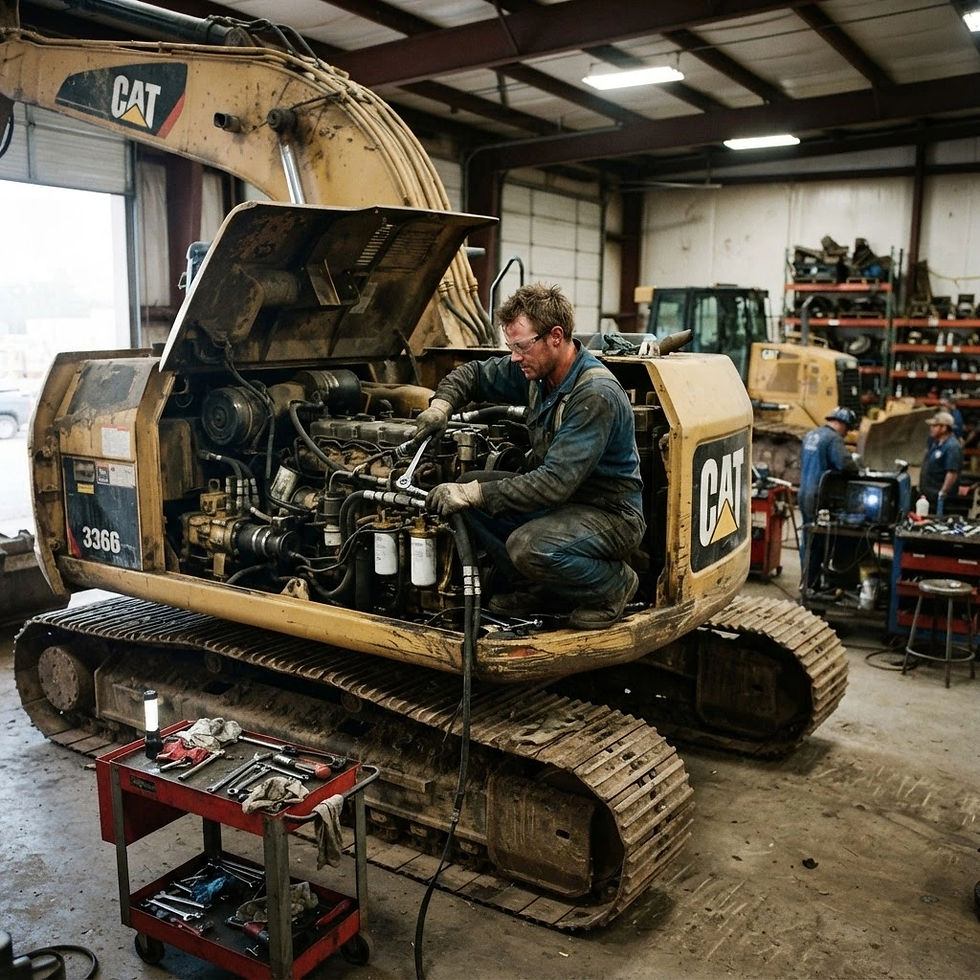
The hydraulic pump is effectively the heart of the excavator's hydraulic system.
When it's working properly, hydraulic oil gets where it needs to go and the machine does what you expect it to do.
Boom up.
Arm in.
Bucket curl.
Swing.
Travel.
Dig.
When it starts failing?
Things get ugly.
You might notice:
Slow hydraulic functions
Weak digging performance
Reduced movement speed
Loss of power under load
Excessive noise
Hydraulic overheating
Inconsistent performance
A machine that seems perfectly fine one minute and half-asleep the next
And here's the dangerous part:
Not every hydraulic problem is a hydraulic pump problem.
A weak machine can have issues elsewhere in the hydraulic system.
Valves.
Relief systems.
Pilot controls.
Filters.
Oil.
Cylinders.
Leaks.
Contamination.
So before you order a pump worth a serious chunk of money, make damn sure you've diagnosed the problem.
Because replacing a perfectly good pump is an expensive way of discovering that the actual problem was something else.
The pump can also be the victim
This is something worth remembering.
A pump can fail because of another problem in the system.
Contamination.
Poor lubrication.
Cavitation.
Suction restrictions.
Incorrect oil.
Overheating.
If you simply replace the pump without dealing with the underlying cause, you may be feeding your brand-new pump into the same environment that killed the old one.
That's like replacing the victim without arresting the murderer.
Not ideal.
Vikfin tip:
Diagnose the hydraulic system before buying the hydraulic pump.
It could save you a very large invoice.
2. The Final Drive
If the hydraulic pump is the heart of the hydraulic system, the final drive is one of the things that actually gets the machine moving.
And final drives have a nasty habit of being ignored until they make a noise that sounds like someone throwing cutlery into a washing machine.
Inside that relatively compact housing you'll find serious mechanical hardware:
Gears
Planetary stages
Bearings
Shafts
Seals
Lubrication systems
And all of it is dealing with substantial loads.
The warning signs
Watch for:
Grinding noises.
Unusual whining.
Oil leaks.
Metal in the gear oil.
One track behaving differently from the other.
Reduced travel performance.
Excessive heat.
Strange noises when changing direction.
If one side suddenly sounds different from the other, don't dismiss it.
That difference could be telling you something.
Why final-drive problems can become expensive very quickly
Imagine a bearing begins to fail.
Initially, the machine might continue operating.
The operator hears a little noise.
Nobody worries.
A week later, the bearing deteriorates further.
Now the gears are being affected.
Metal contaminates the oil.
More components begin wearing.
Eventually the final drive fails.
What started as a relatively contained problem can become a complete component failure.
The moral?
Don't wait until the final drive becomes a very expensive coffee grinder.
If you hear something unusual, investigate it.
3. The Swing Motor
Here's another component that doesn't get much attention until it starts misbehaving.
The swing system allows the upper structure of the excavator to rotate relative to the undercarriage.
In other words:
It lets the excavator do its party trick.
And when something goes wrong, you'll know about it.
You might experience:
Slow swing
Weak swing performance
Jerky movement
Unusual noises
Excessive heat
Difficulty stopping or controlling the swing
Strange behaviour under load
And once again, don't immediately assume the swing motor itself is dead.
The problem could potentially involve other parts of the hydraulic circuit or mechanical swing system.
But if the swing motor is genuinely failing?
You're going to want to deal with it.
Why swing problems are particularly irritating
Because excavation is all about repetitive movement.
Dig.
Swing.
Dump.
Swing back.
Dig.
Swing.
Dump.
Do that thousands of times.
A swing system that isn't operating properly doesn't just make the operator miserable.
It can reduce cycle efficiency.
And cycle efficiency is money.
If the machine takes longer to perform every cycle, you're potentially losing production hour after hour.
That's why “it's only a little slow” can be more significant than it sounds.
4. Hydraulic Cylinders
Now for something that looks relatively simple.
A hydraulic cylinder.
Steel tube.
Rod.
Piston.
Seals.
Simple enough.
Except that cylinders do an enormous amount of work.
They're constantly exposed to:
Heavy loads
Shock loads
Dirt
Water
Abrasion
Side loading
Pressure
Repetitive movement
Eventually something can give.
What happens when a cylinder starts failing?
You might see:
External oil leakage.
That's the obvious one.
But there can also be:
Internal leakage.
And that's sneakier.
A cylinder can sometimes lose performance without producing the spectacular oil leak that everyone associates with a failed hydraulic cylinder.
You may notice:
Drifting
Reduced force
Poor holding ability
Slow movement
Uneven operation
Again, diagnosis matters.
Because the cylinder itself may not be the only possible cause of a hydraulic performance issue.
And then there are the pins and bushes
Sometimes the cylinder gets blamed when the actual problem is mechanical wear around it.
Pins.
Bushes.
Mounting points.
Clearances.
An excavator operates in a dirty, violent environment.
Wear happens.
And excessive movement in a joint can produce some spectacularly unpleasant noises.
So before ordering a cylinder because someone says:
“That cylinder looks fucked.”
have a proper look at the whole assembly.
5. The Hydraulic Valve System
This one is less glamorous.
Nobody stands around the workshop saying:
“Mate, look at that beautiful control valve.”
But valves are critical.
They control where hydraulic oil goes.
They influence pressure.
They determine how hydraulic functions behave.
And when something goes wrong, the machine can start doing strange things.
One function might become weak.
Another might become slow.
The machine might behave differently at different engine speeds.
You may get inconsistent hydraulic performance.
And because hydraulic systems are interconnected, diagnosis can become complicated.
The danger of replacing expensive components by guesswork
This is the common thread running through all five of these problems.
The temptation is always:
“It must be that.”
The machine is weak.
“It must be the pump.”
The machine won't travel properly.
“It must be the final drive.”
The swing is slow.
“It must be the swing motor.”
The boom is drifting.
“It must be the cylinder.”
Sometimes that's exactly right.
Sometimes it's spectacularly wrong.
And that's why the best money you can spend on a sick excavator is sometimes money spent on diagnosis.
The most dangerous words in the workshop
There are two.
“Probably that.”
Probably isn't a diagnosis.
Probably is what happens when somebody is looking at a R150,000 component and hoping they're right.
Before buying an expensive part, ask:
What tests have been done?
What evidence supports the diagnosis?
What else could cause these symptoms?
Has the machine been checked under operating conditions?
Has the oil been inspected?
Are there signs of contamination?
Is there a pressure or flow measurement?
Is the problem affecting one function or several?
Those questions could save you a lot of money.
The hidden enemy: contamination
There is another character that deserves a mention.
Hydraulic contamination.
Tiny particles of dirt and metal can cause enormous problems inside a hydraulic system.
Hydraulic components operate with very tight tolerances.
Contaminated oil can damage pumps, valves and other components.
And once you've got contamination in the system, replacing one component may not be enough.
You may need to identify the source.
Clean the system.
Replace filters.
Flush components.
Inspect the oil.
Otherwise you may simply install another expensive component and feed it the same contaminated oil.
Which is rather like putting a new engine into a car with no oil.
Technically you've replaced something.
Practically you've achieved fuck-all.
The most expensive excavator is the one that isn't working
This is the part that matters most.
Your excavator might be worth R2 million.
R3 million.
R5 million.
More.
But its value isn't simply the number on the balance sheet.
It's what the machine can produce.
Every working hour has economic value.
Every idle hour costs you something.
So when a component fails, don't only ask:
“How much is the replacement?”
Ask:
“How much is another day of downtime going to cost me?”
That changes the conversation completely.
Here's where people get procurement wrong
A contractor gets three quotes.
R80,000.
R72,000.
R58,000.
The R58,000 quote wins.
Because obviously.
Except the R58,000 component takes five days to arrive.
The R72,000 one is available tomorrow.
And the R80,000 one is sitting on a shelf right now.
Suddenly price isn't the only variable.
If your excavator is costing you R20,000 a day in lost production, waiting four extra days potentially costs:
R80,000.
The “cheapest” component just became the most expensive.
Speed is part of the product
This is why we don't believe excavator parts should be viewed purely as commodities.
When your machine is down, you don't just need:
A part.
You need:
The right part.
At the right price.
As quickly as possible.
And you need confidence that it actually belongs in your machine.
That's why compatibility is critical.
Machine model.
Serial number.
Part number.
Configuration.
Application.
Condition.
Get those wrong and you've just added another problem to the original problem.
This is what Vikfin does
Vikfin specialises in used OEM and refurbished OEM excavator parts.
We deal with the machines that keep South African earthmoving moving:
CAT.
Komatsu.
Hitachi.
Volvo.
Doosan.
JCB.
Sumitomo.
We're not interested in selling you a component simply because we've got one on the shelf.
We want to understand what you're trying to fix.
Because if you've got a machine standing on site, the last thing you need is another wrong answer.
Sometimes the right answer isn't the most expensive one
This is important.
A ten-year-old excavator doesn't necessarily need a brand-new dealer component costing hundreds of thousands of rand.
Depending on the machine, application and economics, a quality used OEM component can make much more sense.
Likewise, there are situations where refurbished OEM or quality aftermarket components are the right answer.
And sometimes brand-new OEM is exactly what you should buy.
There is no universal answer.
The right answer depends on the machine and the job.
That's why we're interested in value, not simply price.
Five parts.
Five potential disasters.
One common solution.
Don't ignore the warning signs.
A strange noise.
A slow function.
A leak.
Excessive heat.
Metal in the oil.
A change in machine behaviour.
These things are information.
Use them.
Because fixing a component before it completely destroys itself is generally cheaper than fixing everything after it has exploded.
And remember the golden rule of excavator ownership:
Diagnose first.
Buy second.
Install properly.
Get back to work.
Because your excavator doesn't exist to look impressive in the yard.
It exists to produce.
And every hour it spends sitting still is an hour it's not doing the one thing you bought it to do.
Make money.
So if your excavator starts making strange noises, moving strangely or behaving like it has suddenly developed an attitude...
Don't ignore it.
Don't guess.
And don't automatically buy the cheapest part you can find.
Find out what's wrong.
Then find the right solution.
And when you need a quality used OEM or refurbished OEM component, talk to Vikfin.
Vikfin — Getting You Back to Work Fast.
Because a broken excavator is annoying.
A broken excavator that could have been fixed before it failed is fucking infuriating.

Comments