


Why Excavator Travel Motors Fail in Pairs (And What Happens If You Replace Only One)
- RALPH COPE

- Jan 16
- 4 min read
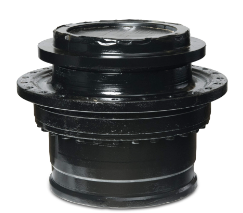
Few excavator failures create more confusion, arguments, and wasted money than final drive (travel motor) failures.
One side stops pulling.The other still “kind of works.”And the first instinct is always the same:
“Let’s just replace the bad one.”
That decision has killed more new travel motors than poor maintenance ever has.
This blog explains why travel motors fail in pairs, how load balancing and pressure differences accelerate damage, what case drain is really telling you, and why replacing only one motor often turns a repair into a repeat failure.
Understanding How Excavator Travel Motors Actually Work
Travel motors do not operate independently.
They are part of a closed mechanical and hydraulic relationship that includes:
Two travel motors
A shared pump circuit
Cross-port reliefs
Counterbalance and brake valves
The undercarriage itself
When one side degrades, the other side doesn’t get a free pass.It gets overworked.
The Myth of the “Good Side”
One of the most dangerous phrases in excavator repair is:
“The other travel motor is still fine.”
What that usually means is:
It hasn’t failed yet
It’s compensating for the weak side
It’s quietly accumulating damage
Travel motors don’t fail symmetrically in time — they fail symmetrically in cause.
Load Balancing: Why Both Motors Share the Pain
When an excavator travels, both motors are commanded to:
Rotate at the same speed
Produce similar torque
Move the machine in a straight line
If one motor becomes weak due to:
Internal leakage
Worn rotating group
Damaged valve block
…the system compensates automatically.
What Compensation Really Means
The hydraulic system:
Increases pressure to maintain motion
Forces the healthy motor to do more work
Creates unequal torque distribution
The “good” motor now:
Carries more load
Sees higher pressure spikes
Runs hotter
Experiences accelerated wear
It doesn’t complain loudly.It just dies later.
Pressure Differences: The Silent Motor Killer
Excavator travel systems rely on balanced pressure between left and right circuits.
When one motor leaks internally:
Pressure drops on that side
Flow escapes through the worn motor
The opposite motor sees increased resistance
This creates:
Uneven pressure loading
Repeated pressure spikes
Shock loading through gears and pistons
Pressure imbalance is especially destructive during:
Turning
Counter-rotation
Climbing
Track correction under load
Why Travel Motors Hate Mismatches
Installing a new or rebuilt motor next to a worn one creates a mismatch problem.
What Mismatch Means in Real Life
A new motor:
Has tight internal tolerances
Minimal internal leakage
Efficient torque conversion
A worn motor:
Leaks internally
Needs more flow to produce torque
Bleeds pressure into heat
The system cannot satisfy both equally.
Result:
The new motor is constantly forced to compensate
Pressure climbs
Case drain rises
Heat builds rapidly
This is how new motors get murdered by old ones.
Case Drain Flow: The Most Ignored Warning Sign
Case drain is the clearest indicator of travel motor health.
What Case Drain Actually Measures
Case drain flow reflects:
Internal leakage
Wear between rotating components
Seal condition
Heat-related tolerance loss
A healthy travel motor:
Has low, stable case drain
Changes minimally with temperature
A failing motor:
Shows rising case drain
Spikes under load
Increases rapidly when hot
What Happens When You Replace Only One Motor
Let’s walk through the most common real-world scenario.
Step 1: One Motor Fails Obviously
Loss of pull on one side
Track stalls under load
Operator complains
Step 2: One Motor Is Replaced
New or rebuilt motor installed
Other side left untouched
No system balancing performed
Step 3: Machine Feels “Better”
For a short time.
The new motor:
Pulls harder
Masks the worn motor’s weakness
Absorbs pressure fluctuations
Step 4: Case Drain Climbs
On the new motor.
Because:
It’s doing more work
Pressure is uneven
Heat increases internal leakage
Step 5: Second Failure
Usually within weeks or months.
And now:
Two motors are bad
The pump has been stressed
The system is contaminated
All because the first decision was wrong.
Travel Motors Fail in Pairs Because Wear Is Shared
Even if only one side shows symptoms, both sides have usually experienced:
The same hours
The same oil
The same contamination
The same operating abuse
Differences in failure timing are normal.Differences in root cause are rare.
The Role of the Undercarriage (Often Ignored)
Undercarriage condition directly affects travel motor life.
Contributing Factors
Uneven track tension
Worn sprockets
Binding rollers
Misaligned frames
These issues:
Increase rolling resistance
Force one motor to work harder
Accelerate paired failure patterns
Replacing one motor without addressing undercarriage load is pointless.
Pump Contribution: The Multiplier Effect
Travel motors don’t fail alone.
If one motor leaks internally:
The pump compensates
Flow demand increases
Heat rises system-wide
This stresses:
The opposite motor
The pump
The valve block
Paired failures are system failures, not component failures.
When Can You Replace Only One Travel Motor?
Rarely — but sometimes.
Single-motor replacement is only acceptable if:
Case drain on the remaining motor is within OEM spec
Both motors are pressure-tested
Oil is clean
Undercarriage is verified
The failed motor was damaged by a known external event (e.g. impact)
Even then, it’s a risk — just a calculated one.
The Cost of Doing It Wrong
Replacing one motor instead of two may save money today.
But it often leads to:
Second motor failure
Repeat labour
Pump damage
Machine downtime
Loss of trust
The most expensive repairs are the ones done twice.
Why Professionals Replace Travel Motors in Sets
Experienced mechanics and rebuilders know:
Balanced systems live longer.
Replacing travel motors in pairs:
Restores pressure balance
Equalises load sharing
Reduces heat
Protects the pump
Extends overall system life
It’s not upselling.It’s system integrity.
Used Travel Motors: Why Matching Matters Even More
When buying used travel motors:
Hours must be similar
Condition must be comparable
Case drain should be measured on both units
Mixing a “good used” motor with a tired one creates the same mismatch problem — just slower.
The Vikfin Position (Uncomfortable but Honest)
At Vikfin, we’d rather:
Lose a single sale
Than sell a part that causes a second failure
If one travel motor has failed:
We strongly recommend evaluating both
We will ask about case drain
We will question imbalance
Because experience says what usually happens next.
Final Truth
Travel motors don’t fail alone.They fail together, even if one dies first.
Replacing only one doesn’t fix the system — it shifts the failure.
If you want reliability:
Balance the load
Match the components
Respect the system
Because hydraulics always collect the debt — with interest.


Comments