


Rebuilding an Excavator? Here's a Checklist of High‑Wear Parts You Should Replace
- RALPH COPE

- Aug 7, 2025
- 5 min read
Updated: Aug 23, 2025

(Make Sure It Runs, Not Just Digs)
Rebuilding an excavator can feel like a moral victory—scraping off decades of grime, wrenching out components, and giving your machine a second life. But let’s get real:
A rebuild isn’t a fix unless you know what to replace. Miss one worn part, and you’re looking at premature downtime, repeat failures, or worse—ending up right where you started.
At Vikfin, we’ve guided countless rebuilds—from cozy small diggers to fleet-wide overhauls. We’ve spent more time under metal than in the cab. And here’s what we’ve learned: no rebuild is complete without replacing key high-wear items.
Let’s break down what those parts are—why they fail—and how to decide whether to rebuild them, buy used OEM, or go new. This guide doubles as your rebuild checklist and your source of rebuilding wisdom.
Why Replacing High-Wear Parts Isn’t Optional
When you rebuild, you’re giving your machine a fresh lease—but only if you replace parts that are designed to fail. Just like disc brakes, clutch plates, or bearings in a car, some excavator components are wear items, meant to be removed and replaced. Skipping them isn’t saving money—it’s postponing failure.
Fail to replace one high-wear part during a rebuild, and you risk:
Immediate issues, like leaks or power loss
Recurring breakdowns right after getting back on-site
Hidden damage, spreading from one part to the next
Higher total costs, thanks to repeated labor, downtime, and freight
Your Rebuild Checklist: High-Wear Parts That Demand Replacement
Here’s your essential list—spawned from the trenches, backed by experience, and the baseline for any serious rebuild.
1. Hydraulic Seals & O-Rings
Why Replace: Seals harden, crack, and leak with age. Any disassembly voids the integrity of the seal face and pressure interface—making full replacements non-negotiable.Tip: Stock full seal kits for your model to cut turnaround time.
2. Hydraulic Filters & Breathes
Why Replace: Contaminant buildup is the silent machine killer—filters loaded with debris jeopardize the entire hydraulic system.Tip: Change filters right after flushing the system, not before.
3. Final Drives & Travel Motors
Why Replace/Inspect: Worn bearings, leaking seals, and chipped gears are typical failures. If internal damage is beyond repair, a tested used OEM replacement is far more reliable than a patched-up original.Tip: Run a pressure and sound test—if anything sounds gritty, don’t risk it.
4. Swing Motors & Gearboxes
Why Replace/Inspect: Internal gears and bearings take relentless abuse. Often, bolts loosen, housing shifts, or planetary alignments warp.Tip: Check backlash tolerances and test swing pressure. If in doubt, replace—Vikfin stocks many ready-to-ship units.
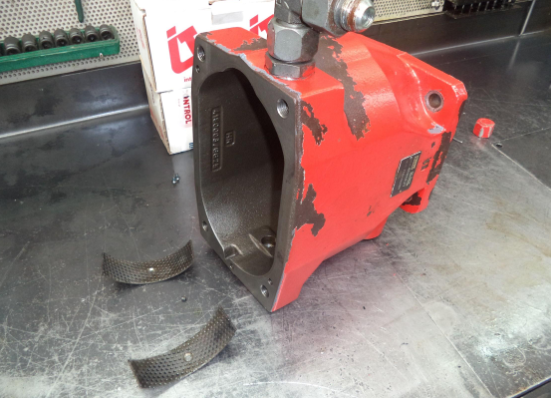
5. Main Hydraulic Pump
Why Replace/Inspect: It’s the heart of your machine. Worn pistons or scored vanes reduce flow, raise operating temperature, and trigger downstream failures.Tip: Even if rebuilt, always pressure-test and calibrate to OEM specs.
6. Control Valves
Why Replace: Hardened, worn spools sit loose in castings, causing chatter and hydraulic drift.Tip: Re-chrome spools if possible, but replace if bore wear is >0.05 mm. Better yet—go OEM.
7. Undercarriage Components (Rollers, Sprockets, Idlers)
Why Replace: Worn links lead to pitch misalignment, ripping, and accelerated wear on final drives/motors.Tip: Measure tooth thickness and chain deflection—exceed hillmarks? Replace.
8. Track Chain & Links
Why Replace: Stretch, bush wear, and cracked pins are common victims. Tracks with more than 6% wear are liability.Tip: Replace entire track sets at once. Mixing old/new sets accelerates wear.
9. Pins & Bushings (Boom/Arm & Front Undercarriage)
Why Replace: Even slightly worn, bushings allow lateral play, stress welds, and oil seal failure.Tip: Inspect weld collars for cracks. A worn bushing looks like a polished channel—not oval, not binding.
10. Cylinders (Boom, Arm, Bucket)
Why Replace/Inspect: Pitted rods, scratched bores, or leaking caps mean failure. Replacing individual seals may not be enough if the underlying surface is compromised.Tip: Hone or re-bore if possible—but if pitting is deep, budget for new or rebuilt cylinders.
11. Heat Shields & Guards
Why Replace: They’re not glamorous, but cracked shields lead to hose rubs, wire rubs, and fires.Tip: Reapply high-temp coatings if shield is serviceable—but replace if bent or degraded.
12. Counterweights & Attaching Bolts
Why Replace/Inspect: Loose counterweights shift the machine's load—wearing on slews and tracks.Tip: Inspect mounting bolts for stretch (color change). Retorque wheels regularly.
Quick Decision Guide: Rebuild vs. Replace vs. Repair
Let’s make decisions easier. Use this decision tree when reviewing each high-wear part:
Can structural integrity be restored?
Yes → Rebuild
No → Replace
Are replacement parts available & affordable?
Yes → Use OEM (new or Vikfin tested used)
No → Consider aftermarket rebuild (riskier)
Does it come with warranty or pressure test?
Yes → Smart bet
No → Walk away
Real-World Rebuild Scenarios: What We’ve Seen
A. Komatsu PC200 Final Drive Failure
Found silver slurry in oil
Internal gear damage confirmed on teardown
Parts unavailable, too expensive to rebuild locally
Solution: Used OEM from Vikfin. Ready-tested and installed—machine running now.
B. Volvo EC900 Excavator Boom Cylinder
Damage discovered on rod during inspect
Rod drawn. No deep scratches → rehoned. Seal kit replaced.
One week later—serviceable again, full warranty.
Why Vikfin’s Used OEM Parts Are Your Best Rebuild Allies
We don’t just sell parts. We supply trusted, verified, tested components already pulled from machines just like yours.
Directly stripped machines with proven specs
Tested against key criteria before listing
Valveless compatibility matching—no guesswork
Nationwide delivery plus warranty
Going with Vikfin means reclaiming productivity—and avoiding the most common rebuild mistakes.
Ultimate Rebuild Checklist (Detailed)
Component | Action / Decision |
Hydraulic Seals/O-Rings | Replace ALL |
Filters, Breathers | Replace |
Final Drives / Travel Motors | Inspect, replace used OEM as needed |
Swing Components | Inspect, replace |
Main Hydraulic Pump | Inspect, test, replace if worn |
Control Valve | Bore check, repair, replace |
Undercarriage Components | Inspect, resurface or replace |
Track Chains & Pins | Replace full set if worn |
Cylinders | Hone or replace as per condition |
Counterweights & Bolts | Re-torque / replace if deformed |
Heat Shields & Guards | Reinstall / replace if damaged |
Maintenance After a Rebuild: Avoid Failing Again
A rebuild isn’t a cure unless followed by maintenance love. Set yourself up with these repeatable routines:
Fluid checks weekly
Oil and filter changes on schedule
Visual inspections before each shift
Track tension adjustments
Torque checks on rebuild bolts after 100 hours
Final Thoughts
If you’re committing to a rebuild, do it right. Treat the high-wear parts with respect, secure OEM replacements, and make a savings plan for the parts you’ll inevitably need again.
The goal isn’t just to bring your excavator back—it’s to keep it operating reliably for the long haul.
When it comes to high-wear parts you either replace or your machine stops, Vikfin is your lifeline. Tested, trusted, OEM quality—ready to ship.


Comments