


“Can You Get It Today?” — The Question Every Excavator Parts Dealer Should Fear


Because when an excavator stops working, speed isn't customer service. It's part of the product.
There is a question that can make an excavator-parts dealer suddenly become very interested in his shoes.
“Can you get it to me today?”
Not tomorrow.
Not “I'll check with the warehouse.”
Not “We'll try and have it out by close of business.”
Not “Our courier normally takes 24 to 48 hours.”
Today.
Because somewhere in South Africa, an excavator is standing.
The operator is standing.
The crew is standing.
The job is waiting.
And the contractor is watching money disappear.
That's the reality behind the question.
And it's why at Vikfin we don't regard “Getting You Back to Work Fast” as a nice marketing slogan.
It is the bloody business.
Let's talk about what actually happens when an excavator breaks
Because the parts industry often looks deceptively simple from the outside.
A customer needs a part.
Supplier supplies part.
Everyone goes home.
Except that's not what happens.
When a machine goes down, there is a chain of events.
And every link in that chain takes time.
The machine fails.
Someone has to diagnose the problem.
Then someone has to identify the component.
Then someone has to establish exactly which version of that component is required.
Then the supplier has to find it.
Then someone has to quote it.
The customer has to approve it.
Payment has to happen.
The part has to be packed.
Transport has to be arranged.
The part has to move.
The mechanic has to install it.
The machine has to be tested.
And finally...
The excavator goes back to work.
That's the real product.
Not the box.
Not the pump.
Not the final drive.
The outcome.
Step 1: Diagnosis
Everything starts here.
And this is where things can go horribly wrong.
The excavator is slow.
Someone says:
“Hydraulic pump.”
Fantastic.
Let's replace it.
Except maybe it's not the pump.
It could be a relief valve.
A control valve.
Pilot pressure.
A suction problem.
Contamination.
A hydraulic cylinder.
A sensor.
Or something else entirely.
This is why a good parts supplier shouldn't simply take the customer's diagnosis as gospel.
Sometimes the customer is right.
Sometimes the mechanic is right.
Sometimes everyone is wrong.
And replacing a R50,000 component because somebody said “I reckon it's the pump” is not diagnosis.
It's gambling.
At Vikfin, the first question isn't always:
“How much do you want to spend?”
Sometimes it's:
“What makes you think that's the problem?”
That question can save everyone time.
Step 2: Identify the machine
Once you've established what you're dealing with, you need to know exactly which machine it is.
And “It's a CAT 320” isn't necessarily enough.
We want the:
Machine make
Model
Serial number
Production information where relevant
Existing component details
Part number where available
Photographs
Why?
Because two excavators can look virtually identical and still have different components.
The wrong part delivered quickly is still the wrong part.
Speed without accuracy is just a faster way to make a mistake.
Step 3: Identify the actual component
Now we know the machine.
Next question:
What exactly do you need?
Hydraulic pump?
Final drive?
Swing motor?
Cylinder?
Valve?
Travel motor?
Engine component?
Undercarriage component?
And again, we're not interested only in what the part looks like.
We're interested in:
What is actually fitted to the machine?
Part numbers matter.
Component numbers matter.
Photographs matter.
Measurements can matter.
Configuration matters.
The more expensive and complicated the component, the less attractive guesswork becomes.
Step 4: Find the part
Now the fun starts.
Because finding a part isn't the same as having a part.
You can search.
You can phone suppliers.
You can check warehouses.
You can contact dismantlers.
You can check imported stock.
You can look for used OEM.
You can look for refurbished OEM.
You can look for aftermarket.
You can look for new OEM.
And suddenly your supposedly simple parts enquiry has become a supply-chain problem.
This is where having stock matters.
A part that exists somewhere in the world isn't particularly useful to a contractor whose excavator is sitting in Mpumalanga.
He doesn't need a theoretical part.
He needs a physical part.
Preferably one that can leave the warehouse now.
Step 5: Compatibility
This is where speed and technical knowledge collide.
You might find the component.
But does it fit?
Does the configuration match?
Does the part number correspond?
Are the mounting points correct?
Are the hydraulic connections correct?
Is the ratio correct?
Is the component suitable for that machine serial range?
This is particularly important with major components such as hydraulic pumps and final drives.
Because once you've spent money transporting a component across the country, discovered that it doesn't fit and then paid a mechanic to remove it again...
Nobody is particularly interested in hearing:
“But it looked exactly the same.”
That's not a solution.
Step 6: Quotation
Now you've identified the machine.
You've identified the component.
You've found a compatible solution.
Now you need to quote.
And here's another point where speed matters.
If a contractor has a machine sitting, he doesn't want to receive a beautifully formatted quotation three days later.
He wants to know:
What does it cost?
Is it available?
When can I have it?
Those three questions are often more important than the font on your quotation.
A quote that arrives tomorrow isn't necessarily useful if the machine needs a part today.
Step 7: Payment
Then comes the administrative bit.
Customer approves.
Payment is made.
And suddenly the supplier discovers that nothing actually happens until someone checks the bank account.
This is where businesses can lose hours.
The customer thinks:
“I've paid.”
The supplier thinks:
“I'll dispatch when the payment reflects.”
The machine continues sitting.
Communication matters.
Processes matter.
And if you're promising speed, the entire business has to be designed around speed.
Not just the sales department.
Step 8: Dispatch
Now we have the part.
It's paid for.
It's identified.
It's compatible.
And it's sitting on the floor.
Fantastic.
But it isn't helping anyone sitting on the floor.
It needs to move.
That means:
Packing
Labelling
Collection
Courier or transport
Waybill
Tracking
Communication
And if the component is large or heavy, logistics become even more important.
A final drive isn't going into an overnight document envelope.
You need a plan.
And preferably a transport company that understands that “urgent” actually means urgent.
Step 9: Installation
The part finally arrives.
Now the mechanic gets involved.
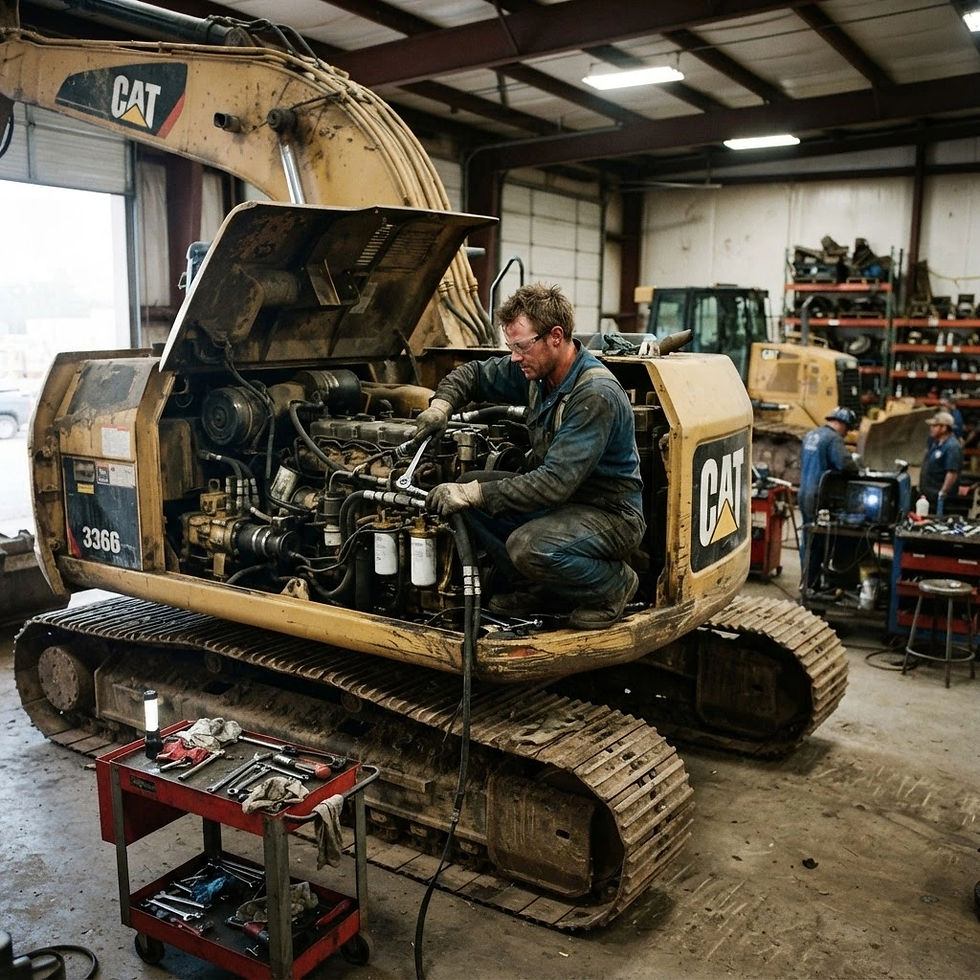
The machine gets stripped.
The new component gets installed.
Hydraulics are connected.
Oil is checked.
Systems are tested.
And hopefully...
The fucking thing starts working.
But even here, the supplier can play a role.
If there is uncertainty about compatibility or installation, having someone available to answer questions can save more time.
Because sometimes the last 10% of the job takes 50% of the frustration.
Step 10: Back to work
And finally, the moment that actually matters.
The excavator starts digging again.
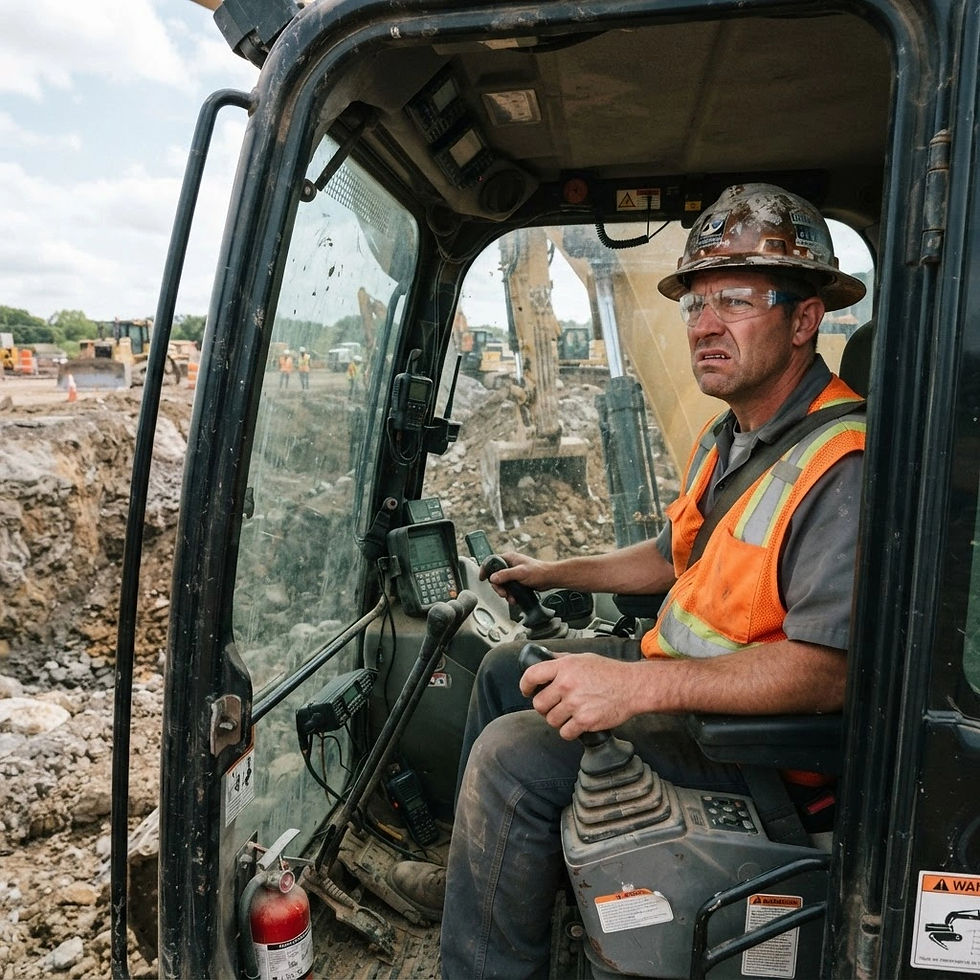
The operator gets back into the cab.
The trucks start moving.
The project continues.
The contractor stops staring at his phone.
Money starts flowing again.
That's the moment we're selling.
Not the pump.
Not the cylinder.
Not the final drive.
That moment.
Speed isn't customer service
This is where Vikfin differs from the traditional idea of customer service.
Customer service is often treated as:
“We answer the phone nicely.”
That's great.
Be polite.
Answer emails.
Return calls.
Don't be a dick.
All good.
But when you're selling excavator parts, that's not enough.
Because the customer isn't sitting at his desk buying stationery.
He's trying to keep a production asset operating.
His problem has a clock attached to it.
So speed isn't an optional extra.
Speed is part of the product.
If you supply a R40,000 component tomorrow when the customer needed it today, you haven't delivered the same product as someone who supplied the same component today.
The physical component might be identical.
The economic value isn't.
The part and the time are inseparable
Imagine two suppliers.
Both have the exact same final drive.
Both charge R60,000.
Supplier A:
Available today.
Supplier B:
Available in seven days.
Are they really offering the same product?
Technically, perhaps.
Economically?
Not necessarily.
If the excavator is generating R7,000 of productive value per hour, the seven-day delay could dwarf the value of the component itself.
This is why availability matters.
And why response time matters.
The customer isn't buying a gearbox
He's buying the end of the problem.
This is a fundamental distinction.
A customer doesn't wake up in the morning thinking:
“I'd really like to own a hydraulic pump today.”
Nobody has ever said that.
He wants his excavator working.
The pump is merely the means to that end.
The final drive is the means.
The cylinder is the means.
The swing motor is the means.
The customer wants:
Production.
Uptime.
Revenue.
A machine that moves.
That's what he's buying.
The fastest supplier isn't necessarily the one with the fastest courier
This is important.
You can have an excellent courier and still be slow.
Why?
Because the delay may happen before the part leaves your building.
Maybe you spent six hours identifying the part.
Maybe the quotation took four hours.
Maybe nobody confirmed payment.
Maybe the warehouse couldn't find the component.
Maybe the wrong part was picked.
Maybe dispatch only happens at 4pm.
The courier isn't the problem.
The process is.
Speed has to be built into the entire operation.
The real race starts when the phone rings
This is why the best parts suppliers need to operate differently.
When the customer calls, the clock starts.
Not when the part leaves the warehouse.
When the phone rings.
That's when the process begins:
Diagnose.
Identify.
Verify.
Locate.
Quote.
Approve.
Pay.
Dispatch.
Install.
Test.
Work.
Every delay along that chain costs someone money.
This is why stock matters
You can't deliver quickly if you don't have the part.
Simple.
A supplier can have the world's greatest website, the slickest salespeople and the most impressive catalogue.
If the component isn't available, none of that matters.
This is why intelligent inventory is so important.
At Vikfin, we're particularly interested in the machines that are actually working in South Africa.
CAT.
Komatsu.
Hitachi.
Volvo.
Doosan.
JCB.
And particularly the 20–30 tonne class where there is a huge installed base of working machines.
We're not interested in owning 10,000 obscure part numbers simply so we can brag about the size of our warehouse.
We're interested in having the right parts available when people actually need them.
Stock is a service
Think about that for a moment.
Having stock isn't just an inventory decision.
It's a customer-service decision.
If I have the component sitting on my floor, I can potentially get it moving today.
If I don't have it, I have to start a search.
That search could take hours.
Or days.
Or weeks.
So when a customer asks:
“Can you get it today?”
The answer often depends on what you've decided to buy six months earlier.
That's the responsibility of inventory management.
Why Vikfin focuses on common machines and common failures
This is exactly why we're deliberately focused.
We don't need to be everything to everyone.
We need to be exceptionally useful to the customers we serve.
If thousands of excavators in South Africa are working in the 20–30 tonne range, then those machines deserve attention.
If certain components repeatedly fail on those machines, those components deserve attention.
If final drives and hydraulic pumps are common pain points, they deserve attention.
It's not about having the biggest stockholding.
It's about having useful stockholding.
Because “I'll source it” isn't the same as “I've got it”
This is a subtle but important distinction.
When a customer calls and you say:
“I can source one.”
That sounds positive.
But what does it actually mean?
Where is it?
How quickly can it move?
Has it been inspected?
Is it compatible?
What condition is it in?
When can it arrive?
There is a massive difference between:
“I know someone who might have one.”
and
“I've got one here.”
The second is what gets machines moving quickly.
Speed also means saying no
This might sound strange.
But sometimes the fastest thing you can do is tell the customer:
“Don't buy that.”
Maybe the part isn't compatible.
Maybe the diagnosis is questionable.
Maybe the cheap component isn't appropriate for the application.
Maybe the serial number doesn't match.
Maybe you can see a problem with the proposed solution.
A supplier who simply says yes to everything isn't necessarily fast.
He's potentially just fast at creating problems.
Accuracy is part of speed.
Fast and wrong is fucking useless
Let's be brutally honest.
If I can deliver the wrong hydraulic pump to you in four hours, I haven't provided excellent service.
I've provided an extremely efficient mistake.
The objective is:
Fast + Correct.
Not merely fast.
That's why Vikfin's process needs both technical knowledge and logistics.
We need to know what we're selling.
And we need to move it quickly.
One without the other isn't enough.
What does “Getting You Back to Work Fast” actually mean?
It means understanding the economics of downtime.
It means responding quickly.
It means asking the right questions.
It means knowing the machines.
It means knowing the parts.
It means having useful stock.
It means checking compatibility.
It means quoting without unnecessary delay.
It means getting payment processed.
It means dispatching promptly.
It means communicating.
It means helping when there is a problem.
And ultimately:
It means getting the excavator back into production.
That's the promise.
The contractor doesn't want excuses
This is another uncomfortable truth.
When a machine is down, nobody wants to hear about your internal problems.
“Our supplier hasn't delivered.”
“The warehouse is busy.”
“The courier was late.”
“The guy who normally handles that is off today.”
Those may all be perfectly legitimate explanations.
But they don't get the excavator working.
The contractor has his own problems.
His client isn't going to accept:
“Sorry, our parts supplier was having a bad day.”
The machine needs to work.
That's the game.
Speed is a competitive advantage
If you can supply the correct part tomorrow while somebody else takes a week, you have created value.
Not by discounting.
Not by giving away freebies.
Not by printing a fancy brochure.
By reducing downtime.
And in this industry, that can be worth considerably more than a small difference in part price.
A supplier who consistently gets machines moving quickly becomes valuable.
Because contractors remember who helped them when they were fucked.
That's what “fast” actually means
Fast isn't:
“We answered your WhatsApp.”
Fast isn't:
“We sent a quotation.”
Fast isn't:
“The part is somewhere in our supply chain.”
Fast means:
The machine is working again.
That's the scoreboard.
Everything before that is process.
The final result is uptime.
So the next time someone asks...
“Can you get it today?”
Don't think of it as an annoying customer demanding special treatment.
Understand what he's really asking.
He's saying:
“My machine is costing me money. Can you help me stop the bleeding?”
That's a very reasonable question.
And it deserves a serious answer.
At Vikfin, that answer is what our entire proposition is built around.
Getting You Back to Work Fast.
Not:
Getting You a Part Eventually.
Not:
Getting You a Quote When We Get Around to It.
Not:
Getting You Something That Looks About Right.
Getting.
You.
Back.
To.
Work.
Fast.
Because downtime doesn't wait
The excavator doesn't care that it's 4:45 on a Friday afternoon.
It doesn't care that tomorrow is a public holiday.
It doesn't care that the supplier's warehouse closes at five.
It doesn't care that the courier only collects once a day.
It doesn't care that your mechanic has another job.
It certainly doesn't care that your accountant wants three quotations before approving the purchase.
The machine has stopped.
The clock is running.
And somebody needs to get it moving again.
That's why speed isn't customer service.
Speed is part of the product.
The product is the component.
The service is the process.
But the thing the customer is actually buying is:
TIME.
Time back on site.
Time back in production.
Time back earning.
And that's why the question every excavator-parts dealer should fear isn't:
“How much is it?”
It's:
“Can you get it today?”
At Vikfin, that's the question we're built to answer.
Vikfin — Getting You Back to Work Fast.
Because when your excavator is standing,
every hour matters.
#Vikfin #GettingYouBackToWorkFast #ExcavatorParts #Earthmoving #Excavators #ConstructionSouthAfrica #PlantHire #MiningSouthAfrica #UsedOEM #HydraulicPump #FinalDrive #Hydraulics #HeavyEquipment #ConstructionEquipment #MachineDowntime #MachineUtilisation #EarthmovingEquipment #CAT #Komatsu #Hitachi #VolvoCE #Doosan #JCB

Comments