


Rebuilt vs Used vs Aftermarket: What’s Actually Best for Your Excavator?
- RALPH COPE

- Feb 19
- 5 min read
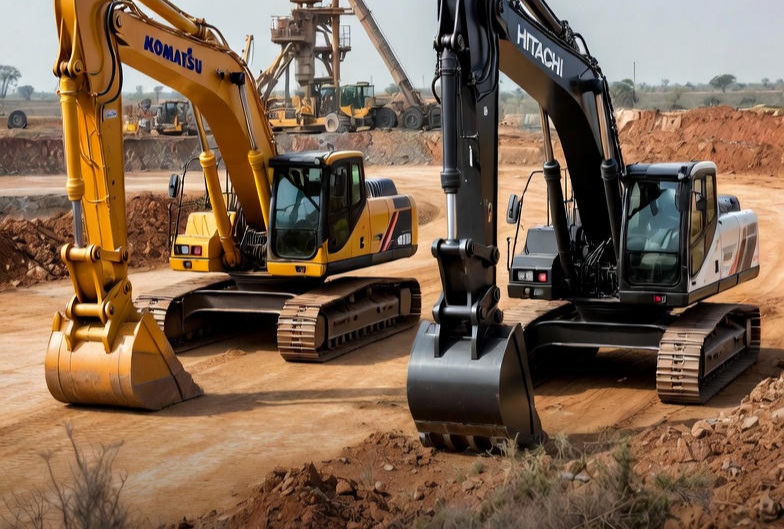
If you run excavators in South Africa long enough, this question is not if — it’s when:
Your hydraulic pump fails.Your final drive starts grinding.Your engine loses compression.
Now you’re standing at a crossroads with three options:
Rebuilt
Used (OEM)
Aftermarket (new non-OEM)
Each option comes with a different price tag, risk level, and long-term financial outcome.
And in a tight-margin industry like construction, civil works, and mining, the wrong choice can cost you hundreds of thousands in downtime and secondary damage.
At Vikfin, we deal with this decision daily. So let’s break it down properly — no marketing fluff, just real-world logic.
Understanding the Three Options
Before comparing them, let’s define them clearly.
1️⃣ Rebuilt Parts
A rebuilt part is an original component that has:
Been disassembled
Worn components replaced
Reassembled
Tested (sometimes)
Rebuilding is common for:
Hydraulic pumps
Injectors
Engines
Final drives
The quality of a rebuilt part depends entirely on:
Who rebuilt it
What parts were used
Whether proper tolerances were maintained
Whether it was tested under load
Rebuilt can be excellent — or a disaster.
2️⃣ Used OEM Parts
A used OEM part is:
An original factory component
Removed from a dismantled machine
Not opened or rebuilt
Inspected for condition
OEM manufacturers such as Caterpillar Inc., Komatsu Ltd., Volvo Construction Equipment, Hitachi Construction Machinery, and Hyundai Construction Equipment build components to strict tolerances and material standards.
When you buy used OEM, you’re buying:
Original engineering
Original metallurgy
Proven durability
Designed lifespan
The only variable is remaining wear life.
3️⃣ Aftermarket (New Non-OEM)
Aftermarket parts are:
Brand new
Manufactured by third-party companies
Reverse-engineered versions of OEM components
These vary dramatically in quality.
Some high-end aftermarket manufacturers are excellent.
But many low-cost imports:
Use lower-grade materials
Skip heat treatment processes
Have looser tolerances
Cut corners on quality control
Aftermarket is the widest spectrum in terms of reliability.
Let’s Compare Them Properly
Now let’s break it down by the factors that actually matter.
1. Purchase Price
Aftermarket (Cheap Option)
Lowest upfront cost
Attractive for cash flow
Used OEM
Mid-range pricing
Usually 30–60% cheaper than new OEM
More expensive than cheap aftermarket
Rebuilt
Often the most expensive of the three
Labour-intensive
Includes new internal components
Winner for lowest invoice price: AftermarketWinner for value balance: Used OEM
But invoice price alone doesn’t tell the full story.
2. Reliability & Durability
This is where the game changes.
Aftermarket
Reliability depends entirely on supplier quality.
Cheap aftermarket parts often fail because:
Materials are inferior
Heat treatment is inconsistent
Machining tolerances are off
Internal components are weak under pressure
Hydraulic systems are unforgiving.Even minor tolerance deviations can cause catastrophic failure.
Used OEM
Built originally for:
Extreme loads
High temperatures
Harsh environments
Long operational cycles
Even after years of use, many OEM parts still outperform new cheap imports.
You’re buying proven engineering.
Rebuilt
Rebuilt reliability depends on:
Skill of technician
Quality of replacement parts
Cleanliness of rebuild environment
Correct calibration
A professionally rebuilt hydraulic pump can be outstanding.
A backyard rebuild can destroy your system.
Most consistent reliability: Used OEMHighest potential reliability (if done perfectly): RebuiltHighest failure variability: Aftermarket
3. Downtime Risk
Downtime kills profit.
If a part fails:
You lose revenue
You pay operators
You risk penalties
You damage client trust
Cheap aftermarket parts statistically carry higher early failure risk.
Rebuilt parts can fail if improperly calibrated.
Used OEM parts generally have predictable wear patterns and fewer sudden catastrophic failures.
Predictability matters.
4. Secondary Damage Risk
This is critical.
Let’s say:
A cheap aftermarket hydraulic pump fails.
Metal particles enter the hydraulic system.
Now you’re replacing:
Valves
Swing motor
Hoses
Possibly the control block
One bad part can contaminate your entire system.
Original OEM metallurgy reduces this risk dramatically.
Rebuilt parts, if poorly cleaned or assembled, can introduce contamination from day one.
5. Warranty Reality
Many suppliers advertise warranties.
But ask these questions:
Does the warranty cover labour?
Does it cover secondary damage?
Does it cover downtime?
Does it cover transport?
Often the answer is no.
Used OEM suppliers like Vikfin typically offer realistic warranties based on inspection and part condition — not marketing gimmicks.
Aftermarket suppliers may offer longer “paper warranties,” but limited actual financial protection.
Warranty length is not the same as warranty value.
6. Lifespan Expectations
Aftermarket (Low-Cost)
Shorter lifespan
Higher early failure risk
Inconsistent quality
Used OEM
Remaining lifespan depends on wear
Often many thousands of hours left
Designed for long-term durability
Rebuilt
Can approach new lifespan
Only if rebuild quality is high
The key variable here is rebuild quality control.
7. Availability & Lead Time
In South Africa, waiting for new OEM parts from overseas can take weeks.
Used OEM parts:
Often immediately available
No factory backorders
Faster installation turnaround
Rebuilt parts:
Require time to rebuild
Can delay projects
Aftermarket:
Usually available
But not always correct spec
Speed matters in active contracts.
8. Risk vs Reward Breakdown
Let’s use a hydraulic pump example:
Cheap Aftermarket Pump
Cost: R80,000
Failure risk: High variability
Secondary damage risk: Significant
Downtime risk: High
Used OEM Pump
Cost: R120,000
Failure risk: Low to moderate
Secondary damage risk: Low
Downtime risk: Lower
Rebuilt Pump
Cost: R150,000+
Failure risk: Depends on rebuilder
Potential lifespan: High
Downtime risk: Moderate (if rebuild delayed)
Now calculate 5 days downtime at R15,000 per day.
That’s R75,000 gone immediately.
Suddenly your “cheap” pump isn’t cheap.
When Rebuilt Makes Sense
Rebuilt parts are ideal when:
The component core is valuable
The rebuilder is reputable
OEM-quality internal components are used
Proper testing is done
Common good rebuild candidates:
Injectors
Engines
Hydraulic pumps (when rebuilt by specialists)
But always vet the rebuilder thoroughly.
When Used OEM Makes the Most Sense
Used OEM is often the sweet spot when:
Budget matters
Reliability matters
Time matters
Machine still has life left
You want original engineering
For:
Final drives
Swing motors
Control valves
Engines
Structural components
Used OEM often delivers the best risk-to-cost ratio.
When Aftermarket Makes Sense
Aftermarket can be acceptable for:
Cosmetic panels
Non-critical fittings
Basic electrical components
Filters (from reputable brands)
Low-load components
But for high-pressure, high-load systems?
Proceed with caution.
The 50% Decision Rule
A simple rule many experienced fleet managers use:
If an aftermarket part is less than 50% of the OEM alternative — ask why.
What was removed to make it that cheap?
Material grade?
Testing?
Quality control?
Precision machining?
There is always a trade-off.
The Bigger Picture: Total Cost of Ownership
Smart contractors don’t ask:
“What does the part cost?”
They ask:
“What will this decision cost me over 2 years?”
That includes:
Downtime
Failure rate
Secondary damage
Labour
Reputation
Safety
The cheapest invoice rarely equals the cheapest lifecycle cost.
The South African Reality
Operating conditions here are harsh:
Extreme dust
High temperatures
Variable diesel quality
Long working hours
Tight project timelines
Machines in these environments need durable components.
That’s why OEM engineering matters.
The Vikfin Philosophy
At Vikfin, the focus is simple:
Quality OEM used parts
Inspected components
Honest condition assessment
Realistic pricing
Fast availability
We understand that contractors don’t just need parts.
They need uptime.
They need reliability.
They need predictable costs.
Final Verdict: What’s Actually Best?
There is no universal answer.
But here’s the practical conclusion:
If cash is extremely tight and the part is non-critical → Aftermarket may work.
If reliability and risk balance matter most → Used OEM is often the smartest choice.
If you have a trusted specialist rebuilder and time → Rebuilt can be excellent.
For most contractors balancing:
Cost
Reliability
Speed
Risk
Used OEM typically wins.
Because in earthmoving, the real question isn’t:
“How cheap can I buy this part?”
It’s:
“How much risk am I willing to carry?”
And in this industry, risk gets expensive fast.
#Vikfin#UsedExcavatorParts#OEMParts#AftermarketParts#RebuiltParts#ExcavatorMaintenance#EarthmovingSA#ConstructionBusiness#HeavyEquipment#PlantHireSA#MiningEquipment#HydraulicPump#FinalDrive#DieselEngineRepair#FleetManagement#EquipmentDowntime#PreventativeMaintenance#SouthAfricaConstruction#PlantMaintenance#SmartContractor


Comments