


The Hidden Cost of Idling: How Excavators Burn Money While Standing Still
- RALPH COPE

- Jul 7
- 5 min read
Updated: 2 days ago
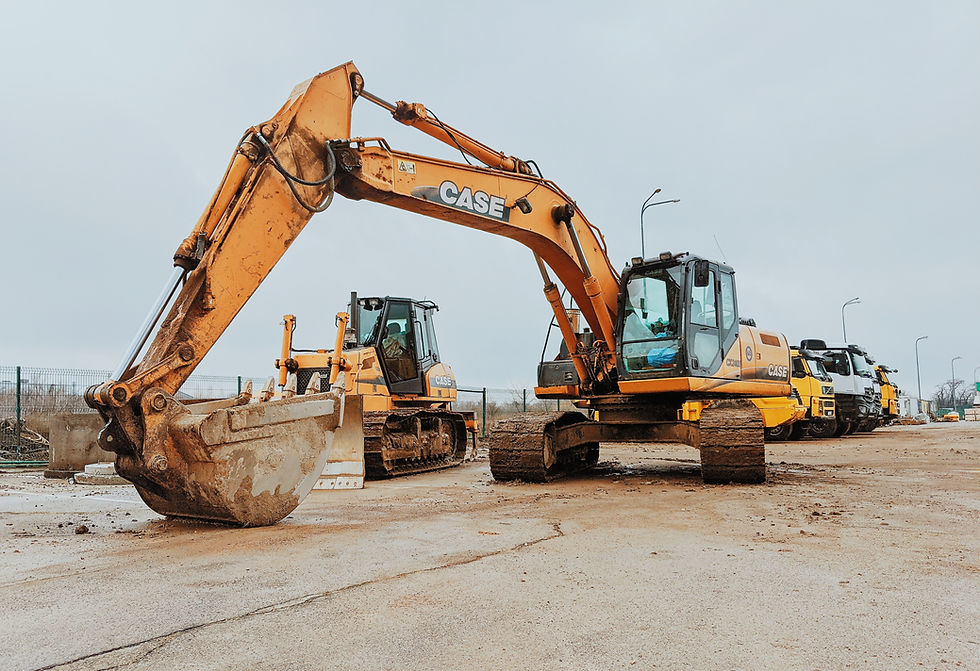
Most excavator owners worry about fuel prices, expensive repairs, and unexpected downtime. Yet one of the biggest drains on profitability often goes unnoticed because it happens when the machine isn't even working.
It's called idling.
Every day, thousands of excavators across South Africa sit on construction sites, mines, and demolition projects with their engines running while accomplishing absolutely nothing.
Operators may leave machines idling during breaks, while waiting for trucks, during site meetings, or simply out of habit.
While an idling excavator may appear harmless, it is quietly consuming fuel, increasing wear on critical components, shortening engine life, and adding unnecessary maintenance costs.
Over the course of a year, excessive idling can cost contractors hundreds of thousands of rand.
At Vikfin, we regularly see the consequences of excessive idling in the form of worn engines, damaged turbochargers, clogged emissions systems, and premature component failures.
Understanding these hidden costs can help equipment owners significantly improve profitability and extend machine life.
What Exactly Is Excavator Idling?
Idling occurs whenever an excavator's engine is running but the machine is not performing productive work.
Common examples include:
Waiting for dump trucks to arrive
Lunch and tea breaks
Shift changes
Site inspections
Operators using air conditioning while stationary
Waiting for instructions from supervisors
Excessive warm-up periods
Many operators believe that idling causes little or no damage because the engine is operating at low RPM. In reality, modern diesel engines are often under more stress during prolonged idling than during normal working conditions.
The Fuel Cost Nobody Calculates
The most obvious cost of idling is fuel consumption.
Depending on machine size, an excavator can burn between 2 and 6 litres of diesel per hour while idling.
Consider a typical 20-ton excavator:
Average idle fuel burn: 3 litres per hour
Diesel price: R25 per litre
Cost per idle hour: R75
Now imagine the machine idles for:
3 hours per day
22 working days per month
Monthly fuel waste:
66 hours × R75 = R4,950
Annual fuel waste:
R4,950 × 12 = R59,400
That's for a single excavator.
A contractor operating ten excavators could be wasting nearly R600,000 annually simply by allowing excessive idling.
And fuel is only the beginning.
Engine Hours Continue to Accumulate
Many excavator owners focus heavily on engine hours because maintenance schedules are based on them.
Here's the problem:
The hour meter doesn't care whether the machine is digging trenches or parked beside a stockpile.
An excavator that idles for three hours daily accumulates approximately:
792 idle hours annually
That's nearly 800 service hours generated without producing any work.
As a result:
Oil changes occur sooner
Filters require replacement earlier
Major services arrive faster
Engine rebuild intervals are reached sooner
Owners end up paying maintenance costs for hours that generated no revenue.
Why Idling Damages Diesel Engines
Diesel engines are designed to operate under load.
When excavators are digging, lifting, or loading, combustion temperatures remain high and fuel burns efficiently.
During prolonged idling:
Combustion temperatures drop
Fuel burns less efficiently
Carbon deposits increase
Moisture accumulates internally
Over time this creates a perfect environment for engine damage.
Carbon Build-Up
One of the biggest problems associated with idling is carbon accumulation.
Carbon deposits can form on:
Injectors
Valves
Pistons
Turbocharger components
Exhaust systems
These deposits reduce efficiency and can eventually cause performance issues.
Symptoms often include:
Reduced power
Increased fuel consumption
Hard starting
Excessive smoke
Many expensive injector replacements can be traced back to years of excessive idling.
Turbocharger Damage
Modern excavators rely heavily on turbochargers.
A turbocharger spins at extremely high speeds and requires proper exhaust flow and temperature to operate efficiently.
During extended idle periods:
Exhaust temperatures drop
Carbon accumulates inside the turbo
Oil contamination increases
Bearings experience unnecessary wear
Over time, carbon can restrict turbo movement and reduce performance.
At Vikfin, turbocharger failures are among the most common engine-related component replacements we encounter.
In many cases, excessive idling played a significant role.
Hydraulic Systems Suffer Too
Many operators assume that idling only affects the engine.
Not true.
Hydraulic systems also suffer.
When an excavator idles:
Hydraulic oil remains circulating
Components continue generating heat
Pumps remain active
Seals continue aging
Although wear rates are lower than during operation, unnecessary hours still accumulate on hydraulic components.
This means:
Hydraulic pumps reach replacement intervals sooner
Valve wear increases
Seal deterioration accelerates
Considering the enormous cost of hydraulic repairs, even small increases in wear can become expensive over time.
Wet Stacking: The Silent Engine Killer
One lesser-known consequence of prolonged idling is a condition called wet stacking.
Wet stacking occurs when fuel fails to burn completely inside the engine.
Unburned fuel accumulates within the exhaust system and engine components.
Consequences include:
Carbon deposits
Increased emissions
Reduced efficiency
Exhaust contamination
Engine performance issues
Mining contractors and earthmoving companies operating machines for extended periods at low load are particularly vulnerable to this problem.
Emissions Systems Hate Idling
Modern excavators have increasingly sophisticated emissions systems.
These may include:
Diesel Particulate Filters (DPF)
Exhaust Gas Recirculation (EGR)
Diesel Oxidation Catalysts (DOC)
These systems require high exhaust temperatures to function correctly.
Excessive idling can cause:
DPF blockages
Regeneration failures
Sensor faults
Increased maintenance requirements
Repairing emissions systems can be extremely costly, particularly on newer excavator models.
The Productivity Trap
Beyond mechanical damage, idling often signals deeper operational inefficiencies.
Excessive idle time may indicate:
Poor site coordination
Truck shortages
Inefficient scheduling
Operator habits
Communication breakdowns
Reducing idle time frequently improves overall site productivity.
Many contractors discover that cutting idle hours not only lowers fuel consumption but also increases production.
How Much Idling Is Acceptable?
Some idling is unavoidable.
Operators may need to:
Warm engines briefly
Cool down turbochargers before shutdown
Wait a few minutes between tasks
However, most manufacturers recommend limiting unnecessary idling whenever possible.
As a general rule:
If a machine will be stationary for more than five minutes, shutting it down is often the better option.
Always consult the manufacturer's recommendations for your specific model.
How Fleet Managers Can Reduce Idle Time
1. Train Operators
Many operators simply don't realize how costly idling is.
Education often delivers immediate improvements.
2. Monitor Idle Hours
Modern telematics systems can track:
Engine hours
Idle hours
Fuel usage
Productivity metrics
What gets measured gets managed.
3. Create Shutdown Policies
Establish clear site rules regarding engine shutdown procedures.
4. Improve Site Logistics
Better coordination between excavators and haul trucks reduces waiting times.
5. Use Auto-Idle Features
Many modern excavators include automatic idle reduction systems.
These technologies can dramatically reduce fuel consumption.
The Vikfin Perspective
At Vikfin, we dismantle and inspect excavator components every day.
Over the years, we've seen countless engines, turbochargers, injectors, hydraulic pumps, and cooling systems that suffered premature wear due to excessive idling.
While idling may seem insignificant in the moment, the cumulative effect can be devastating.
A few extra hours every day can ultimately translate into:
Higher fuel bills
More frequent servicing
Increased component wear
Expensive repairs
Reduced machine lifespan
In an industry where margins are constantly under pressure, eliminating unnecessary idling is one of the simplest and most effective ways to reduce operating costs.
Final Thoughts
An excavator earns money when it is moving dirt—not when it is sitting still with the engine running.
The hidden cost of idling extends far beyond fuel consumption. It quietly accelerates wear throughout the machine, shortens component life, and increases maintenance expenses.
For contractors, fleet managers, and owner-operators, reducing idle time represents one of the quickest ways to improve profitability without spending a single rand on new equipment.
The next time you see an excavator standing still with its engine running, remember: that machine is not resting. It is burning fuel, accumulating wear, and quietly eating into your profits.
#Vikfin #ExcavatorMaintenance #ConstructionEquipment #EarthmovingEquipment #DieselEngines #FleetManagement #ExcavatorRepairs #HeavyEquipment #MiningEquipment #FuelEfficiency #HydraulicSystems #Turbocharger #PlantHire #ConstructionIndustry #EquipmentManagement #SouthAfricaConstruction #ExcavatorOwners #MachineMaintenance #HeavyMachinery #CostSavingTips


Comments