


Torque and Trouble: What Really Happens When You Mix Non-OEM Parts in Your Excavator

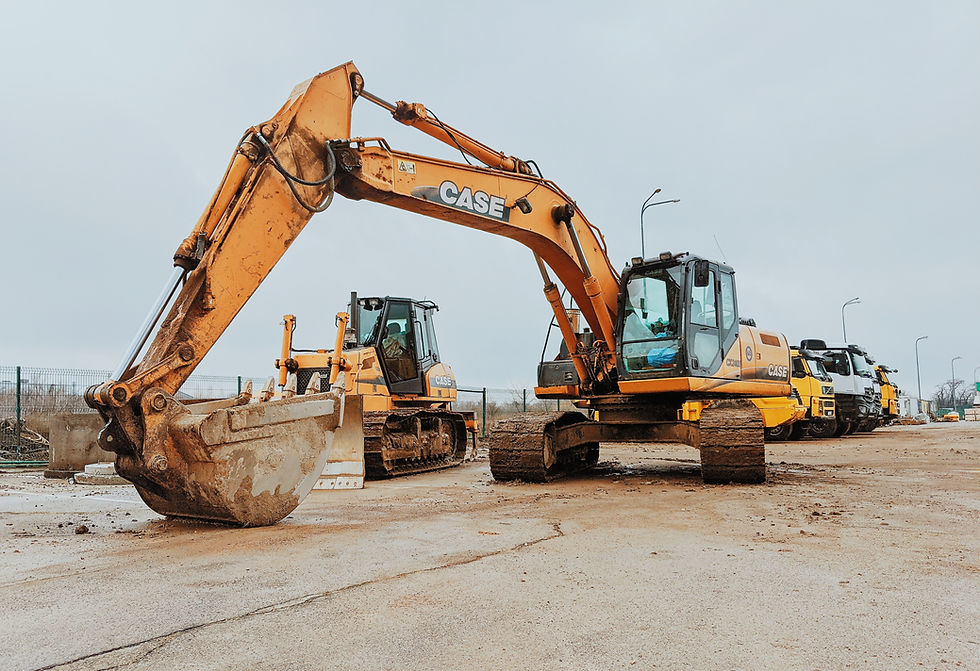
When your excavator goes down, the clock starts ticking — and every minute of downtime costs you money. The pressure is on, and the temptation is real: you find a cheaper, non-OEM part online, it looks close enough, and you think, “How bad could it be?”
Well… bad enough to cost you an engine, a final drive, or your next big contract.
Mixing non-OEM (aftermarket) parts into an excavator designed with precise OEM tolerances is like putting cheap tyres on a Ferrari. It might roll for a while, but sooner or later, something’s going to explode — and it won’t be pretty.
Let’s dig into what really happens when you use non-OEM parts in a high-performance excavator, how torque and pressure amplify the damage, and why used OEM parts from Vikfin are the smarter, safer, and more profitable option.
1. OEM vs. Non-OEM: What’s the Real Difference?
At first glance, OEM (Original Equipment Manufacturer) and non-OEM parts can look nearly identical. Same shape, same dimensions, same shiny finish.
But under the surface, it’s a completely different story.
OEM parts are made by the same company that designed and built your machine. That means:
Perfect dimensional accuracy
Correct material hardness
Precision gear tolerances
Proper hydraulic compatibility
Non-OEM (aftermarket) parts, on the other hand, are copies.They’re reverse-engineered approximations — close, but not exact.
That “almost right” fit is where the trouble begins.
2. Torque: The Silent Destroyer of Imitation Parts
Excavators are torque monsters. Every pivot, track movement, and bucket curl pushes torque through dozens of components — all designed to work in harmony.
When one part isn’t up to spec, it creates stress points.
For example:
A slightly undersized gear tooth puts extra load on its neighbour.
A loose bushing causes micro-vibrations that damage bearings.
A cheap hydraulic seal leaks under high pressure, contaminating oil.
Torque amplifies every imperfection. What starts as a minor mismatch can quickly escalate into a full mechanical breakdown.
In short: The stronger the torque, the faster non-OEM parts fail.
3. Common Places Where Non-OEM Parts Cause Havoc
1. Final Drives
Aftermarket gears and seals often lack the heat treatment OEM parts receive.Result: premature wear, oil leaks, and catastrophic gear failure under load.
2. Hydraulic Pumps
Non-OEM pumps may have incorrect flow or pressure ratings.Result: cavitation, overheating, and damage to control valves and motors.
3. Swing Motors
If the internal tolerances are off by even 0.1 mm, you’ll get vibration, imbalance, and bearing fatigue.
4. Cylinders and Seals
Cheap seals can’t handle hydraulic spikes — they deform or crack, leading to leaks and contamination.
5. Electrical Components
Aftermarket sensors and solenoids may not communicate properly with OEM control systems, causing false alarms or erratic operation.
4. The Chain Reaction: How One Cheap Part Can Destroy an Entire System
Imagine you install a non-OEM seal kit in your final drive to save a few thousand rand.
Here’s what can happen:
The seal wears prematurely under heat and pressure.
Oil leaks out slowly while dirt and moisture seep in.
Bearings start grinding, contaminating the oil with metal shavings.
The gears wear unevenly, increasing torque resistance.
The hydraulic motor overheats and fails.
That’s not a R3,000 problem anymore — that’s a R150,000+ rebuild.
And if you’re unlucky, that contaminated oil can travel up your hydraulic lines, damaging pumps and valves along the way.
5. The False Economy of Cheap Parts
Let’s be brutally honest: price is what drives most non-OEM purchases.But what looks like a deal today becomes a disaster tomorrow.
Upfront cost:
Non-OEM part: R10,000
Used OEM part: R18,000
After 3 months:
Non-OEM part fails → downtime + labour + lost work: R40,000+
Used OEM part still going strong
Which one’s cheaper now?
You wouldn’t fill your R3 million excavator with knock-off hydraulic oil — so why risk its life with substandard parts?
6. Real-World Example: Torque Mismatch in Action
A contractor in Gauteng replaced a worn drive gear on a Volvo EC240 with an aftermarket copy.
At first, it worked fine. But within 200 hours, the operator noticed grinding during travel. By 400 hours, the final drive seized.
Post-mortem inspection revealed:
Gear tooth hardness was 20% lower than OEM spec.
Oil contamination from micro-flaking.
Bearing pitting caused by excess vibration.
The entire drive was ruined — and the supposed “savings” evaporated instantly.
7. Engineering Tolerances Matter — Here’s Why
OEM engineers spend years fine-tuning tolerances to ensure everything fits, moves, and withstands pressure precisely.
For example, an OEM gear might have a clearance tolerance of 0.02 mm — thinner than a human hair.
Aftermarket manufacturers? They might allow 0.1 mm or more.
That tiny difference might not sound like much, but under the strain of 30 tons of machine and 350 bar of hydraulic pressure, it’s catastrophic.
Vibration, misalignment, and heat buildup start to compound until something gives way.
8. Oil Contamination: The Invisible Killer
Every time a non-OEM part wears faster than intended, it releases tiny metal or rubber particles into your system.
These circulate through your hydraulic oil like shrapnel.
They:
Scratch precision valve surfaces
Damage pump pistons
Destroy seals
Reduce system efficiency
The result? A hydraulic system that slowly chokes to death — and you never see it coming until it’s too late.
OEM parts maintain integrity under stress. Non-OEM components, by contrast, shed material like cheap brake pads.
9. The Hidden Costs of Non-OEM Parts
It’s not just about replacement costs.Using non-OEM components can also void your warranties, insurance claims, and even cause machine downtime that kills profitability.
Hidden costs include:
Extended downtime: Waiting for rework or replacements.
Higher labour bills: Frequent repairs or refitting.
Reduced resale value: Machines with non-OEM parts lose buyer confidence.
Lost productivity: Crews sitting idle while repairs drag on.
When you add it all up, those “cheap” parts are anything but.
10. The Environmental Impact
At first, “used OEM parts” and “environmentally friendly” don’t sound like they belong in the same sentence — but they do.
Every time you reuse a tested OEM part, you’re:
Extending the life of precision-engineered metal
Reducing waste and landfill material
Cutting the carbon footprint of new manufacturing
Meanwhile, cheap non-OEM parts fail faster and end up in scrap heaps sooner.
Vikfin’s approach — recycling OEM quality with verified performance — supports both your bottom line and the planet.
11. How Vikfin Tests Used OEM Parts
You might be wondering, “How can I trust a used part?”
Here’s how Vikfin ensures reliability:
Inspection: Every part is stripped, cleaned, and visually examined.
Measurement: Critical tolerances are measured against OEM specs.
Testing: Components like final drives and hydraulic motors are pressure-tested under load.
Certification: Only parts that pass full operational testing are stocked.
No shortcuts. No guessing. Only proven OEM performance at a fraction of the new price.
12. Why Mixing Non-OEM Parts Creates System Imbalance
Think of your excavator as a finely tuned orchestra. Each component — engine, pump, valve, motor — has a specific rhythm.
Add one out-of-tune instrument (a non-OEM part), and suddenly the whole performance sounds off.
That’s what happens when:
A non-OEM hydraulic pump delivers slightly off pressure
The engine sensor reads 5% incorrectly
The control valve flow is mismatched
Small discrepancies cause major imbalance — and systems that should work together start fighting each other.
13. The Math of Failure: A Simple Example
Let’s say your machine runs 10 hours a day, five days a week — 2,000 hours per year.
An OEM pump rated for 10,000 hours costs R80,000.A non-OEM equivalent rated (optimistically) for 5,000 hours costs R45,000.
Over five years:
OEM = one replacement (R80,000)
Non-OEM = two replacements (R90,000) + downtime (R30,000+)
Total: OEM saves you R40,000 or more — and a whole lot of frustration.
14. Why Operators Trust Used OEM Over New Aftermarket
Seasoned contractors know:
Used OEM is built better than brand-new aftermarket.
It fits perfectly without adjustment.
It’s been proven under real-world conditions.
That’s why companies across South Africa are turning to Vikfin for genuine used OEM components — not as a backup plan, but as their first choice.
15. Real Case: The Doosan Dilemma
A construction firm in Durban installed a non-OEM swing motor on a Doosan DX300 to save R25,000.
Three weeks later, hydraulic pressure spikes caused a motor failure — followed by oil contamination that took out the main pump.
Total repair bill: R180,000.Lesson learned: they now use Vikfin-tested OEM motors only.
16. The Science of Metal Hardness (and Why It Matters)
OEM components undergo heat treatment to reach precise hardness levels — often Rockwell 55–60 for gears and shafts.
Aftermarket copies frequently skip or shortcut this process.
Too soft = premature wear.Too hard = brittle and prone to cracking.
Either way, torque finds the weak spot and destroys it.
Used OEM parts retain their original metallurgy — that’s why they last.
17. Why Non-OEM Parts Compromise Safety
It’s not just performance — it’s safety.
An excavator failure during lifting, swinging, or trenching can injure operators or damage surrounding equipment.
A failed cylinder seal or snapped gear tooth at the wrong moment can send tonnes of metal moving unpredictably.
When people’s safety is on the line, only OEM strength and precision make sense.
18. Preventing Non-OEM Nightmares: A Checklist
Before buying any replacement part, ask:✅ Is it OEM or tested used OEM?✅ Does it come with traceable part numbers?✅ Has it been bench-tested under pressure?✅ Is it guaranteed to fit your exact model?✅ Will it maintain system compatibility?
If any answer is “no” — walk away.
19. The Vikfin Advantage
When you buy from Vikfin, you’re not just getting a part — you’re getting peace of mind.
Every part is:
100% OEM
Professionally tested
Guaranteed to fit
Backed by decades of heavy-equipment experience
Whether it’s a final drive, swing motor, or hydraulic pump, you know it’s real, it’s reliable, and it’s ready to work.
20. Conclusion: Don’t Let Cheap Parts Break a Million-Rand Machine
The torque inside an excavator doesn’t forgive mistakes.It exposes them — fast.
Mixing non-OEM parts into a precision-built system is asking for failure.
If you want reliability, longevity, and real return on investment, stick with tested used OEM parts from Vikfin.They cost less than new, last longer than aftermarket, and keep your machine — and your business — running strong.
Because in the real world, cheap parts aren’t savings. They’re ticking time bombs.
#ExcavatorMaintenance #UsedOEMParts #Vikfin #ExcavatorRepairs #HeavyEquipment #SouthAfricaConstruction #AftermarketParts #OEMvsAftermarket #ExcavatorHydraulics #FinalDriveFailure #TorqueTesting #HydraulicLeaks #MachineUptime #ExcavatorPerformance #DoosanExcavator #VolvoExcavator #ExcavatorCare #PreventativeMaintenance #ExcavatorFleetManagement #ConstructionEquipment


Comments